With Orange County prices where they are, more buyers are asking a creative question: what if we bought together? Siblings, close friends, parents and adult children, and blended families increasingly explore co-ownership as a way to afford a home that none of them could buy alone.
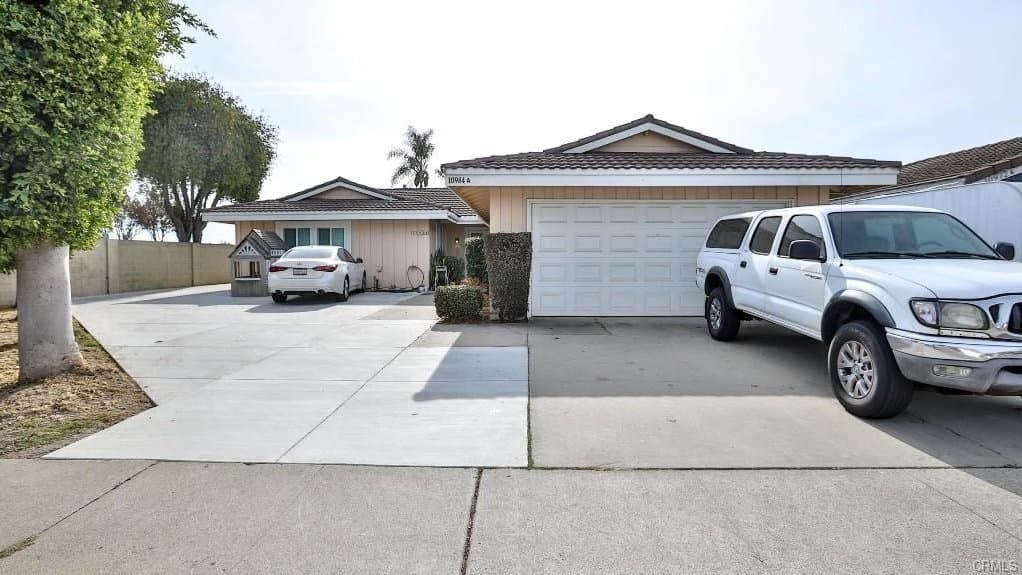
The challenge is making the arrangement livable. Most co-buying horror stories involve cramped shared spaces and unclear rules. A property with two separate residences, such as 10984 Goldeneye Ave in Fountain Valley, can solve a lot of those problems.
Why Two Residences Help
At this property, the main home (1,716 sq. ft., 3 bed / 2.5 bath) and the 2023 ADU (1,200 sq. ft., 3 bed / 2 bath) sit on a 9,880 sq. ft. corner lot. The ADU has a separate address and separate meters. For co-buyers, that structure offers:
- Real privacy. Each household has its own front door, kitchen, and living area.
- Clear utility accounting. Separate meters make bill-splitting simple.
- Equal-feeling arrangements. Two full homes can reduce the sense that one party gets the "better" space.
- Flexibility. If one party eventually moves out, the unit can be rented.
Who Co-Buys?
- Siblings inheriting or planning for parents' care.
- Friends with compatible lifestyles and financial goals.
- Parents and adult children pooling resources.
- Blended families who want proximity without sharing a single household.
- Investors who partner to share capital and management.
Structures to Understand
Co-ownership can take several legal forms, and each has different implications for rights, taxes, and exit options. Common structures include:
- Tenancy in common, where each owner holds a defined share and can generally sell or transfer their share.
- Joint tenancy, with equal shares and rights of survivorship.
- LLC or other entity ownership, often used for investment partnerships.
An attorney experienced in real estate can help you choose a structure that matches your goals.
Questions to Settle Before You Buy
Honest conversations early prevent disputes later:
- Who contributes what? Down payment, closing costs, and ongoing expenses.
- How will costs be shared? Mortgage, taxes, insurance, maintenance.
- Who lives where, and for how long?
- What happens if someone wants out? Buyout terms, right of first refusal, and timelines.
- What if someone cannot pay? Remedies and communication plans.
- Who makes decisions? Day-to-day versus major decisions.
- What happens upon death, divorce, or job relocation?
A Written Agreement Is Essential
A co-ownership agreement should be in writing and reviewed by a lawyer. It should cover contributions, responsibilities, use of the property, dispute resolution, and exit strategy.
Financing Considerations
Lenders have specific requirements for co-borrowers, including credit, income, and debt-to-income ratios. Speak with a lender early to understand how a joint application would work and what documentation you will need. If the ADU is rented, rental income potential of roughly $3,500 per month may also be considered, depending on the program.
The Upside of a Rentable ADU
Co-buyers sometimes want one household to live in the ADU while the other lives in the main home. Others prefer to rent the ADU and split the income. Having both options is a major advantage compared with a single-residence purchase.
Lifestyle Fit
Fountain Valley offers parks, shopping, schools, and freeway access, which makes it convenient for households with different schedules and commutes. A corner lot gives each household room to breathe.
Download the Guide
We have prepared a co-ownership financial guide outlining key questions, structures, and cost-sharing approaches to discuss with your advisors.
Download the Co-Ownership Financial Guide and explore whether sharing 10984 Goldeneye Ave could work for your group.
Disclosure: General information only, not legal or financial advice. Consult an attorney, tax advisor, and lender.